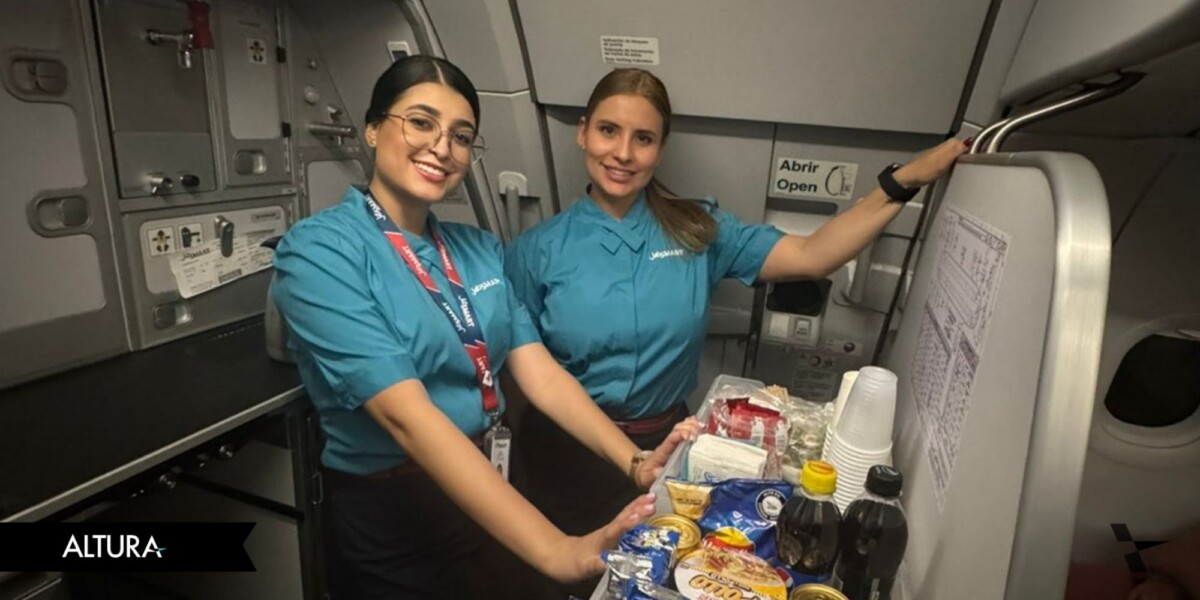

Onboard retail remains one of the few areas where airlines can directly influence both commercial performance and customer experience in real time. At its best, it brings together operational precision, customer insight and brand expression in a uniquely constrained environment. At its worst, it becomes a lightning rod for fractured commercials and a neglected passenger relationship.
Traditionally, buy-on-board has evolved in small, incremental steps: menus have changed, devices have improved, digital tools have been added. But the underlying model of how retail is structured, delivered and owned has remained largely intact. That model is now under pressure. Not because of a single innovation, but because retail elsewhere has already moved on, and the gap aviation has always felt is widening.
Retail has already reset the rules
Across the wider retail landscape, change has not just been rapid. It has been relentless. Friction has been designed out of the buying process. Personalisation has become expected rather than optional. Data is no longer a by-product but the engine of performance. Perhaps most importantly, modern retail has become highly responsive. It senses, adapts and optimises continuously, often in real time.
Customers no longer “shop” in the traditional sense. They move through experiences where buying is effortless, contextual and sometimes almost invisible. When those same customers become passengers, their expectations do not reset at the aircraft door.
Aviation is responding, but not coherently
Within aviation, the response is visible, but fragmented. Airports are expanding their retail propositions, balancing convenience with increasing investment in experience and premiumisation. Digital storefronts and pre-order models are extending the retail window beyond the terminal. At the same time, multiple players, airlines, airports and technology platforms, are competing to influence the same passenger. The result is a more dynamic but also more contested landscape.
Within onboard retail itself, the limitations of the current model are increasingly exposed.
Airlines are taking retail back, but without a clear alternative
There is a growing trend of airlines bringing outsourced onboard retail programmes in-house. This is often presented as a strategic shift. In reality, it is more often a reaction: a reaction to models dominated by caterers protecting infrastructure and margin structures, or system providers positioning software as the solution to fundamentally operational problems. It is also fuelled, in some cases, by unrealistic expectations of rapid revenue growth or “step-change” transformation.
There is no silver bullet. When supplier models are not truly retail-led, frustration is inevitable, and airlines step in. Not because they are better equipped, but because the current model is no longer serving them. The risk is obvious: bringing a broken model in-house does not fix it. It risks further investment in non-core activity while widening the gap between expectation and delivery.
That gap has been further exacerbated by a growing mismatch between how passengers are primed to buy, and how onboard retail is designed to sell. Travel retail is increasingly emotional and impulse driven. Purchases are shaped less by need and more by moment, by environment, interaction and experience. Airports are engineered for this. Aircraft cabins are not.
The return of “free” and rise of hybrid models
At the same time, there is a noticeable shift back towards complementary onboard offerings. This is driven by a mix of brand positioning, competitive pressure, and a reassessment of how retail contributes to the overall passenger experience. The result is a move towards hybrid models: selective premiumisation, bundled elements, and more targeted retail approaches.
But this introduces complexity. Retail is no longer a standalone activity. It becomes part of the product, part of the experience, and part of the economics of the ticket itself. Most onboard retail models were not designed to operate in this blended space. As a result, what appears to be a strategic shift often creates new operational and commercial tensions.
Duty free is no longer the anchor it once was
Perhaps the least surprising shift is the declining role of duty free as the foundation of onboard retail. Changing passenger behaviour, regulatory pressures, and the growth of alternative retail channels have steadily eroded its relevance. At the same time, a clearer understanding of the true economics, including shrinkage, complexity and margin dilution, is forcing a reassessment.
What replaces it is less clear. Higher-margin categories require tighter control. Impulse purchasing is less predictable. And airlines increasingly find themselves competing with airports, where choice and pricing are often more compelling. The traditional trolley model, once central to onboard retail, is increasingly out of step with how customers expect to buy.
The operating model has not kept up
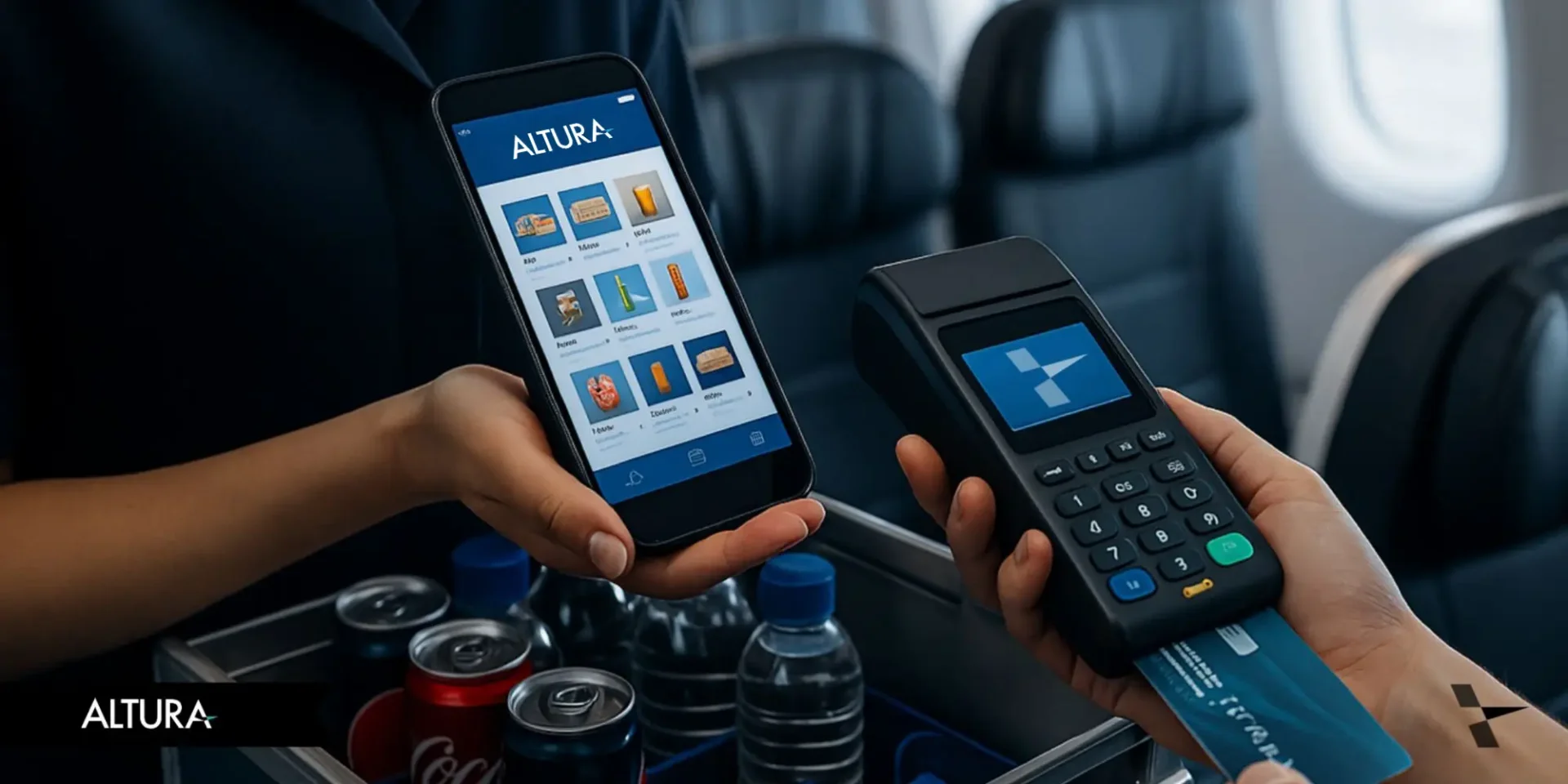
Despite these shifts, onboard retail is still largely delivered through fixed ranges, manual processes, fragmented systems and heavy reliance on crew. When it works, it works well. When it does not, recovery is limited. Execution varies because the model itself is inconsistent, particularly when operational realities are not fully understood or accounted for.
For a long time, the gap between expectation and delivery was tolerated: passengers understood the constraints, airlines accepted incremental progress. Arguably, that position is no longer sustainable. Passengers now compare onboard retail to the best retail experiences they encounter anywhere. At the same time, airlines are increasingly reliant on ancillary performance and customer satisfaction.
The pressure is building from both sides, and the current model is caught in between. The issue is no longer incremental improvement; nor is it a product or technology problem or failure of intent. The challenge is more deep-seated, structural and systemic.
So what next?
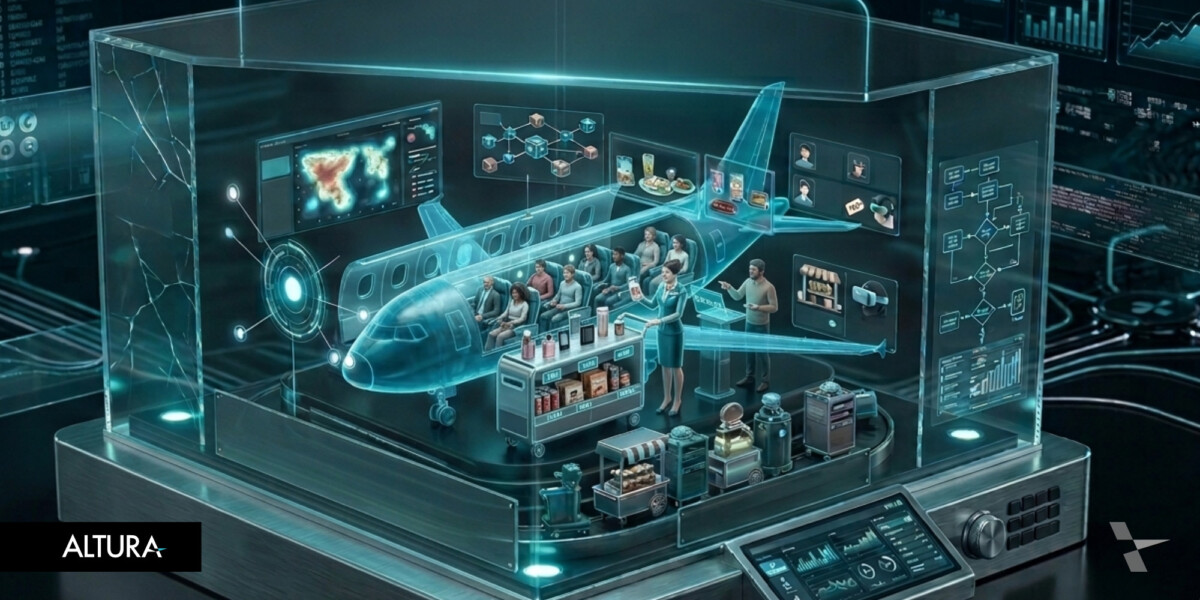
The next phase for onboard retail will not be defined by more products, more apps or more data in isolation. It will be defined by a shift from managing retail as a collection of activities to operating it as a system. A system that connects offer, execution and continuous improvement, reliably and at scale. One that allows airlines to decide which elements they retain, and where they partner, without inheriting unnecessary complexity or risk.
Closing thought
Airline retail is not being disrupted from the outside. It is being quietly reshaped from within through the tension between expectation and execution, control and capability, ambition and reality. Those that recognise this as a system challenge will move ahead. Those that do not will continue to optimise a model that is already under strain.
At Altura, we see onboard retail not as a product or a service line, but as an operating system. One that must bring together commercial design, operational execution, and data-driven improvement. In our experience, most challenges do not originate within these elements, but in the gaps between them.
Closing those gaps is where the next phase of value will be created. It also provides an opportunity for airlines to balance service, efficiency and brand without compromise, and to strengthen, rather than dilute, their relationship with passengers.